Stainless steel is the go-to material for corrosion-resistant machined parts, but grades behave very differently on a CNC lathe. Here is a practical comparison of 303 vs 304 vs 316 stainless steel for buyers specifying turned and milled components.
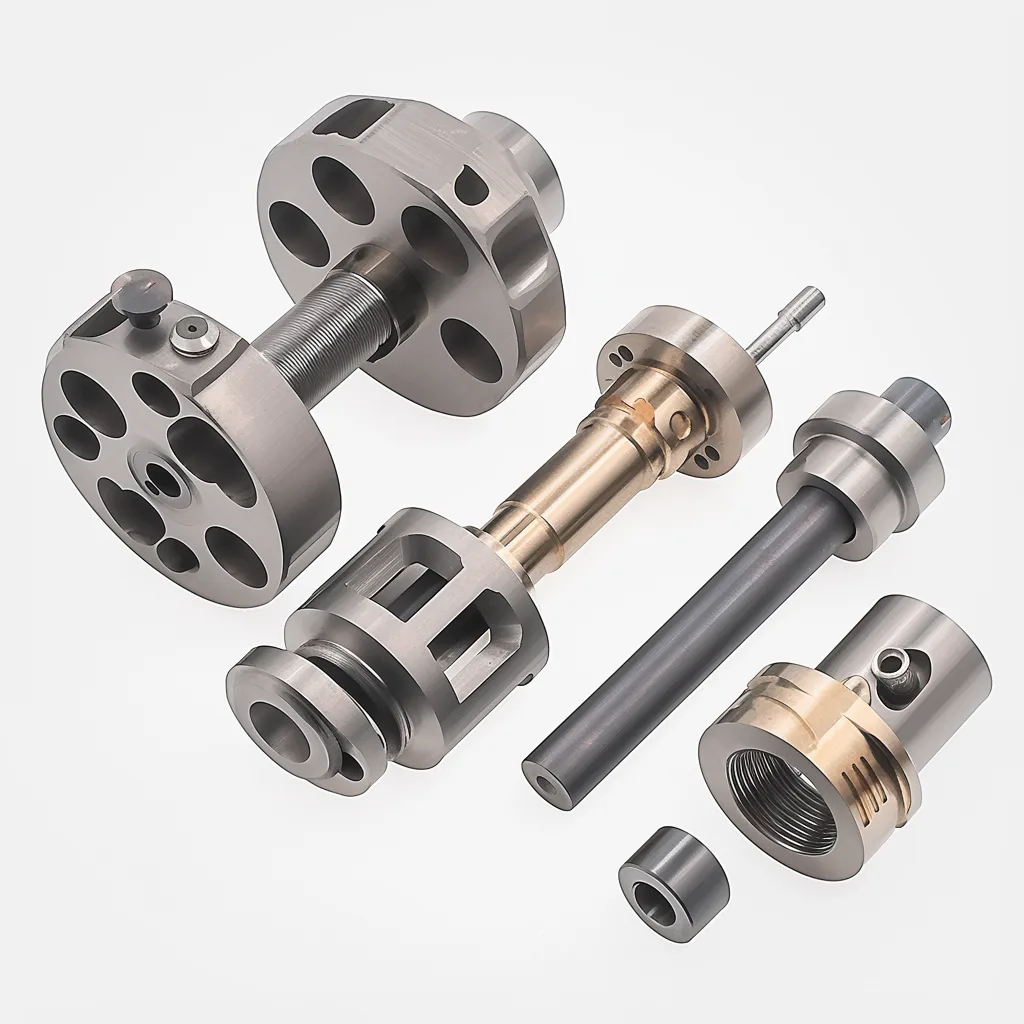
Comparison Table
| Grade | Machinability | Corrosion resistance | Typical uses | Relative cost |
|---|---|---|---|---|
| 303 | Excellent (free-machining) | Good | Fittings, shafts, fasteners, high-volume turned parts | Low |
| 304 | Fair | Very good | General hardware, food equipment, enclosures | Medium |
| 316 | Fair–difficult | Excellent (chlorides) | Marine, chemical, medical-device prototypes, outdoor | Higher |
| 17-4PH | Fair | Good | High-strength shafts, aerospace-style parts | Higher |
Grade 303: Fastest to Machine
303 contains added sulfur, which breaks chips easily and speeds up turning. It is ideal for threaded fittings, pins and shafts where extreme corrosion resistance is not needed. It is not recommended for welding or for parts exposed to aggressive environments.
Grade 304: The All-Rounder
304 offers very good corrosion resistance and is widely available in bar, plate and sheet. It machines more slowly than 303 and tends to work-harden, so experienced tooling strategies matter. It is the default for many motor shafts and general hardware.
Grade 316: For Harsh Environments
Molybdenum gives 316 better resistance to chlorides and acids. Choose it for marine hardware, chemical equipment and outdoor parts. Expect higher material and machining cost.
Finishing Stainless Steel Parts
Passivation removes free iron after machining and improves corrosion resistance. Other options include bead blasting, brushing, electropolishing and black oxide (on some grades).
How to Choose
- Need low cost and fast turning? → 303
- Need good corrosion resistance and weldability? → 304
- Saltwater, chemicals or outdoors? → 316
- Need high strength? → 17-4PH
See examples in our stainless steel threaded fittings and turned stainless steel automotive parts.
Get a Quote for Your Parts
Send your drawing (PDF, STEP or DWG) with quantity, material and finish. An engineer from Zhufeng Precision will review it and reply within 24 hours.
FAQ
Which stainless steel is easiest to machine?
303 is the most machinable common grade thanks to its sulfur content.
Is 316 better than 304?
316 has better resistance to chlorides and chemicals; 304 is sufficient for most indoor and general applications.
Should stainless parts be passivated?
Passivation is recommended after machining to restore corrosion resistance, especially for 304 and 316.