Finding a low volume CNC machining supplier in China is very different from finding a mass-production factory. When you need 5 prototypes or 200 pilot-run parts, most large factories either ignore the inquiry or quote a price that only makes sense for 10,000 pieces. This guide explains how engineers and purchasing managers can identify suppliers that are actually set up for small orders — and how to avoid the common mistakes.
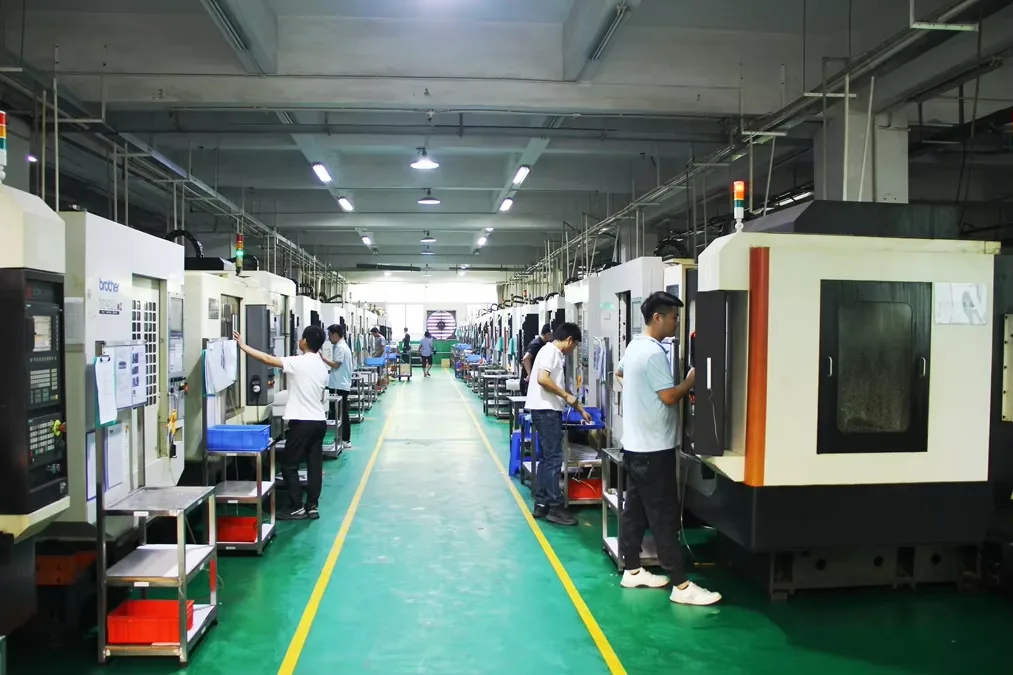
What “Low Volume” Means to a CNC Supplier
In CNC machining, low volume usually means anything from a single prototype to a few thousand pieces. At these quantities, programming, fixturing and setup time make up a large share of the cost. A supplier that is good at low volume work has workflows designed to keep those fixed costs small: engineers quote directly from 3D files, CAM programs are written quickly, and simple modular fixtures are used instead of dedicated tooling.
If a supplier’s first question is “what is your annual volume?”, they are probably optimized for mass production. A low-volume specialist will instead ask about your drawing, tolerances, material and target delivery date.
7 Things to Check Before You Choose a Supplier
- Do they accept your quantity? Ask directly whether they accept 1, 5 or 20 pieces, and whether a minimum order charge applies.
- Who reviews your drawing? You want an engineer, not only a salesperson, to check tolerances, threads and finish requirements.
- DFM feedback. Good suppliers point out features that drive cost — deep pockets, tiny internal radii, unnecessary tight tolerances.
- Process range. Can they handle CNC milling, CNC turning and finishing such as anodizing or plating in one order? Coordinating several vendors yourself adds delay.
- Inspection. Ask how parts are measured and whether inspection photos or a dimensional report are available.
- Communication speed. A quote or question within 24 hours is a good sign that they can also handle engineering changes quickly.
- Scale-up path. Can the same supplier move your approved prototype into batch production without changing the process?
Typical Pricing Structure for Small CNC Orders
| Cost element | Share in a 5-piece order | Share in a 500-piece order |
|---|---|---|
| Programming & setup | High | Low |
| Machining time | Medium | High |
| Material | Low–medium | Medium |
| Finishing (anodizing, plating) | Often a minimum lot charge | Per piece |
| Shipping | Express courier | Air or sea freight |
This is why unit prices fall quickly as quantity rises. Always ask for several quantity breaks — for example 5 / 50 / 200 pieces — so you can see where the price curve flattens.
Red Flags When Sourcing Small-Batch Machined Parts
- A quote with no questions at all on a complex drawing — critical details may have been overlooked.
- Very low prices with no mention of finishing, inspection or packaging.
- No willingness to sign an NDA for proprietary designs.
- Claims of extremely tight tolerances on every feature without reviewing the drawing.
- Only stock photos and no answers to specific technical questions.
What to Send With Your First Inquiry
You will get faster and more accurate quotes if you send a complete package: a 3D model (STEP or IGES), a 2D drawing (PDF) with tolerances and threads, material grade, surface finish, quantity and target date. Our guide to custom parts from drawing lists exactly what to include.
Why Dongguan Is a Strong Base for Low-Volume Machining
Dongguan in Guangdong Province has one of the densest clusters of CNC machining, sheet metal, molding and surface-finishing workshops in the world. For buyers this means shorter lead times: anodizing, plating, heat treatment and material supply are often within a short drive of the machine shop. At Zhufeng Precision we use this ecosystem to deliver low volume CNC machining and one-off machined parts without the overhead of a mass-production factory.
A Simple Supplier Evaluation Process
Shortlist two or three suppliers and send the same drawing package. Compare not only the price but the quality of their questions and DFM suggestions. Then order a small first batch or a first-article sample. Measure the parts, check finish quality and evaluate communication. The supplier that performs best on this trial order is usually the right long-term partner.
Get a Quote for Your Parts
Send your drawing (PDF, STEP or DWG) with quantity, material and finish. An engineer from Zhufeng Precision will review it and reply within 24 hours.
FAQ
What is a typical MOQ for CNC machining in China?
Mass-production factories often ask for hundreds or thousands of pieces, while low-volume specialists accept prototype quantities from 1 piece, sometimes with a minimum order charge.
How long does low volume CNC machining take?
Simple parts can often be machined within a few working days after drawing confirmation; finishing and shipping add time. Always confirm lead time on the quote.
Is it safe to send drawings to a Chinese supplier?
Work with suppliers who will sign an NDA, share only the files needed for quoting, and avoid sending complete assemblies when only one part is required.