Buyers often ask why a single prototype costs so much more per piece than a production run. The answer lies in how CNC machining cost per part is built. Once you understand the cost drivers, you can design and order smarter — and compare quotes more fairly.
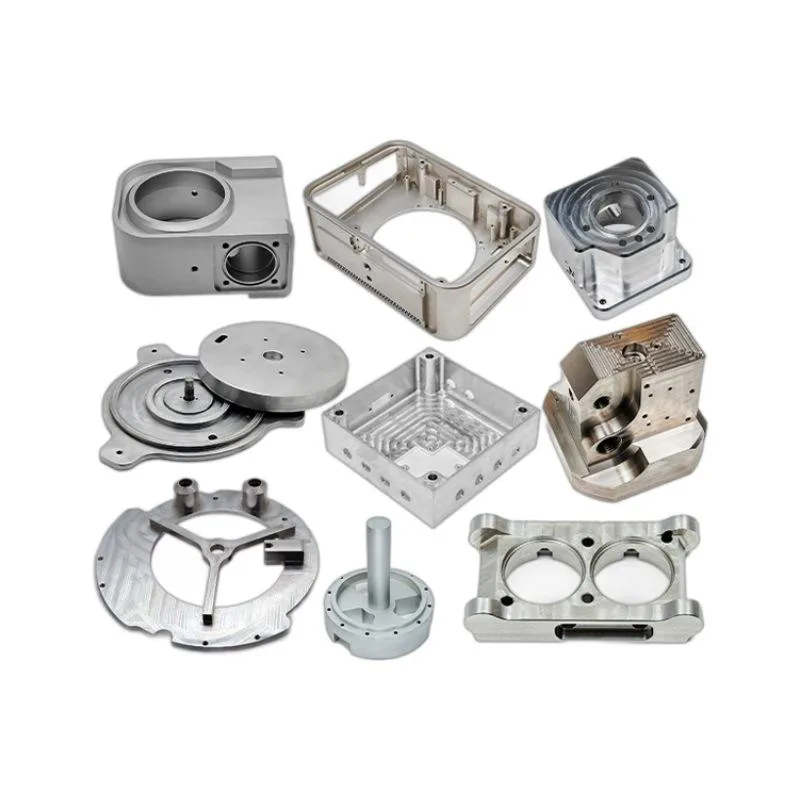
The Five Building Blocks of a CNC Quote
1. Programming and setup
Before the first chip is cut, an engineer creates the CAM program, chooses tools and prepares fixtures. This is a one-time cost per order. For one prototype it can be the largest part of the price; for 500 pieces it becomes almost negligible per unit.
2. Machining time
Machine time depends on how much material is removed, the number of setups, feature complexity and tolerance requirements. A part that needs three setups on a 3-axis machine may need only one on a 5-axis machine — which can lower total cost for complex parts.
3. Material
Material cost depends on grade and stock size. Aluminum 6061 is economical and fast to machine; stainless steel 316, titanium and PEEK cost more and machine more slowly.
4. Finishing
Anodizing, plating and powder coating are usually done in batches. Small orders often carry a minimum lot charge from the finishing line.
5. Inspection, packing and shipping
Dimensional inspection, protective packaging and express shipping are smaller elements but should be visible in a professional quote.
How Quantity Changes the Unit Price
| Quantity | Setup cost per piece | Typical effect on unit price |
|---|---|---|
| 1 pc | 100% of setup | Highest — prototype pricing |
| 10 pcs | 10% of setup each | Large drop |
| 100 pcs | 1% of setup each | Approaches machining + material cost |
| 1,000 pcs | Negligible | Process optimization becomes the main lever |
10 Ways to Reduce CNC Machining Cost Per Part
- Apply tight tolerances only to functional features; use a general standard such as ISO 2768-m elsewhere.
- Avoid deep, narrow pockets — keep depth under about 4× the tool diameter where possible.
- Use generous internal corner radii so larger, faster tools can be used.
- Choose standard materials and stock sizes.
- Reduce the number of setups by keeping features accessible from fewer directions.
- Use standard thread sizes and avoid very deep tapped holes.
- Skip cosmetic finishes on early prototypes.
- Combine several part numbers in one order to share setup, finishing lots and shipping.
- Ask for quantity breaks and order the volume where the curve flattens.
- Ask the supplier for DFM feedback before finalizing the design.
How to Compare Quotes Fairly
Check that each supplier quoted the same material grade, finish, tolerance level and quantity. Look for hidden items: is inspection included? Is the finishing lot charge included? Is shipping by express or freight? The cheapest number on paper is not always the lowest total cost.
If you are planning prototypes followed by a pilot run, read our pages on low volume CNC machining and low MOQ custom metal parts to see how we structure small-order pricing.
Get a Quote for Your Parts
Send your drawing (PDF, STEP or DWG) with quantity, material and finish. An engineer from Zhufeng Precision will review it and reply within 24 hours.
FAQ
Why is a single CNC prototype so expensive?
Programming and setup are fixed costs. In a one-piece order the whole setup cost is carried by that single part.
Does 5-axis machining cost more?
The hourly rate is higher, but fewer setups can make complex parts cheaper overall.
What is the cheapest material for CNC machining?
Aluminum 6061 is usually the most economical metal because it is affordable and machines quickly.