Motor shafts look simple, but small errors in bearing journals or straightness cause noise, vibration and early failure. Here is what to specify when working with a custom motor shaft manufacturer.
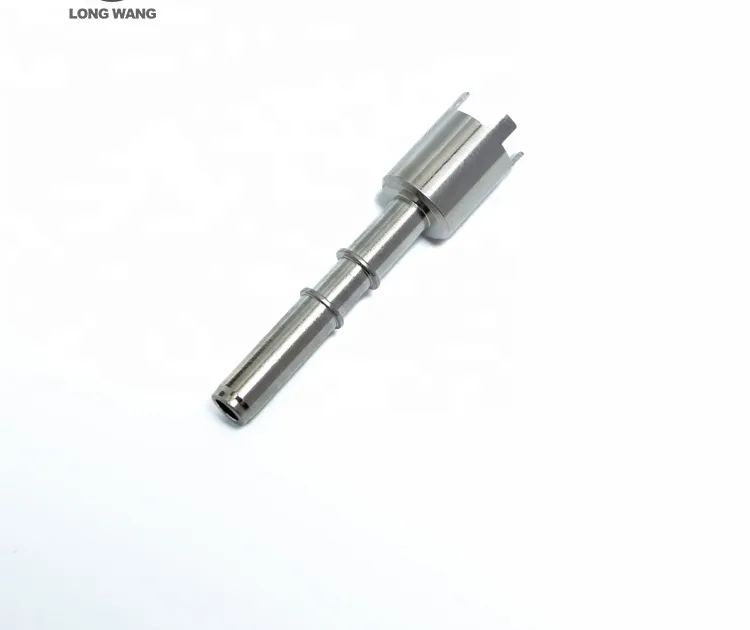
Common Shaft Materials
| Material | Properties | Typical use |
|---|---|---|
| Stainless 304 | Corrosion resistant, non-hardenable | Pumps, food equipment, small motors |
| Stainless 416 / 420 | Hardenable, magnetic | Motor shafts needing wear resistance |
| 45# / 1045 steel | Economical, can be induction hardened | General drives, gearboxes |
| 40Cr / 4140 | High strength after heat treatment | High-load shafts |
Manufacturing Steps
- CNC turning of diameters, shoulders and threads
- Milling of keyways, flats or D-cuts
- Heat treatment if required
- Cylindrical grinding of bearing journals
- Surface finishing: black oxide, nickel plating or passivation
- Inspection of diameters, runout and straightness
What to Put on the Drawing
- Tolerance class for bearing seats (e.g., k6, h6)
- Surface roughness on journals (e.g., Ra 0.4–0.8 µm)
- Runout or straightness requirements
- Keyway dimensions to standard
- Hardness and heat-treatment depth if needed
- Thread specifications and chamfers
Small Batches and Prototypes
Shafts are well suited to low-volume CNC turning. Prototype shafts can be produced quickly, then the same program is reused for batches.
See our CNC turned & ground motor shafts and read about machining tolerances.
Get a Quote for Your Parts
Send your drawing (PDF, STEP or DWG) with quantity, material and finish. An engineer from Zhufeng Precision will review it and reply within 24 hours.
FAQ
Why are motor shafts ground after turning?
Grinding achieves tighter diameter tolerances and better surface finish on bearing journals.
Which stainless steel is best for motor shafts?
304 for corrosion resistance; 416 or 420 when hardness and wear resistance are needed.
Can you add keyways and threads?
Yes. Keyways, flats, D-cuts and threads are machined to your drawing.