Tolerances define how much a dimension may vary. Specifying them well is one of the simplest ways to control both quality and cost. This guide explains CNC machining tolerances and ISO 2768 in practical terms.
What Is ISO 2768?
ISO 2768 is a general tolerance standard. Instead of writing a tolerance next to every dimension, you note “ISO 2768-m” in the title block, and all untoleranced dimensions follow the medium class. Part 1 covers linear and angular dimensions; Part 2 covers geometrical tolerances such as flatness and straightness (classes H, K, L).
ISO 2768-1 Linear Tolerances (selected ranges)
| Nominal size (mm) | f (fine) | m (medium) | c (coarse) |
|---|---|---|---|
| 0.5 – 3 | ±0.05 | ±0.1 | ±0.2 |
| >3 – 6 | ±0.05 | ±0.1 | ±0.3 |
| >6 – 30 | ±0.1 | ±0.2 | ±0.5 |
| >30 – 120 | ±0.15 | ±0.3 | ±0.8 |
| >120 – 400 | ±0.2 | ±0.5 | ±1.2 |
When to Specify Tighter Tolerances
- Bearing seats and press fits
- Locating holes and dowel pins
- Sealing faces and O-ring grooves
- Mating features in assemblies
Mark these individually on the drawing. Leave the rest at ISO 2768-m to avoid unnecessary cost.
How Tolerances Affect Price
Each step tighter may require slower cutting, additional finishing passes, temperature control or grinding — plus more inspection time. Over-tolerancing is one of the top reasons for high quotes.
Inspection
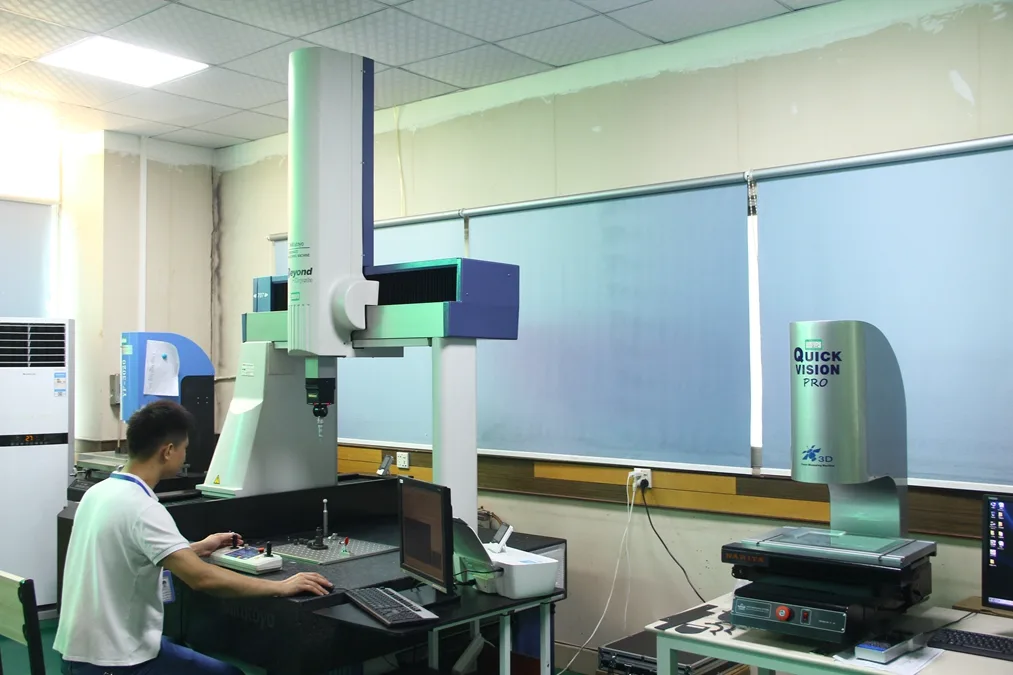
Critical dimensions are verified with calipers, micrometers, bore gauges, height gauges or a coordinate measuring machine (CMM). Ask your supplier which features will be reported.
Read how we handle tolerances on custom parts from drawing and low volume CNC machining.
Get a Quote for Your Parts
Send your drawing (PDF, STEP or DWG) with quantity, material and finish. An engineer from Zhufeng Precision will review it and reply within 24 hours.
FAQ
What does ISO 2768-m mean on a drawing?
All dimensions without a specific tolerance follow the medium class of ISO 2768-1.
Should I use fine tolerances everywhere?
No. Use tighter tolerances only on functional features; it reduces cost without affecting performance.
How are tight tolerances inspected?
With precision instruments and, for complex geometry, a coordinate measuring machine (CMM).