Anodizing is the most popular finish for machined aluminum. It adds corrosion resistance, wear resistance and color. This guide covers what buyers need to know when anodizing CNC aluminum parts.
Type II vs Type III Anodizing
| Feature | Type II (decorative) | Type III (hard anodizing) |
|---|---|---|
| Typical thickness | Thin (a few to ~25 µm) | Thick (~25–75 µm) |
| Hardness / wear | Moderate | Very high |
| Colors | Wide range | Usually natural gray or black |
| Dimensional change | Small | Significant — plan allowances |
| Typical uses | Consumer products, enclosures | Sliding parts, clamps, wear surfaces |
Color Options and Consistency
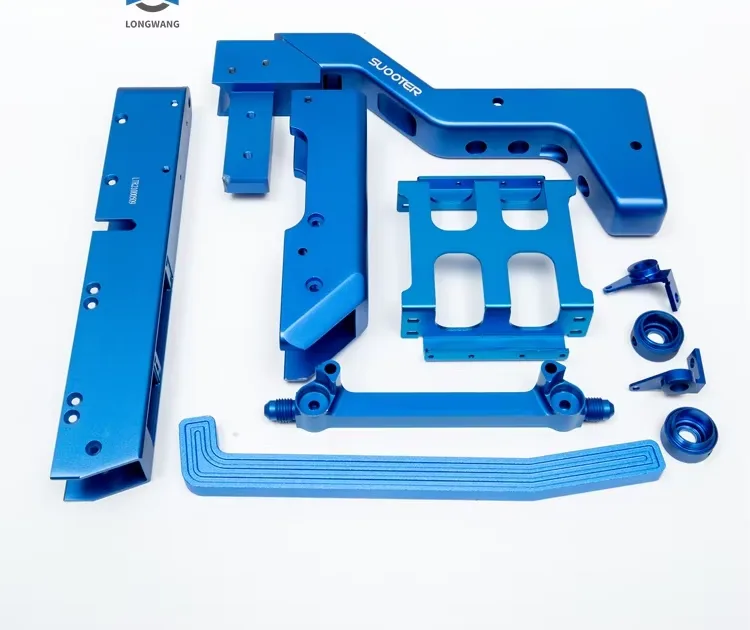
Black, clear, red, blue, gold, purple, green and orange are common. Color depends on alloy, surface preparation and dye batch. To keep matching parts consistent, use the same alloy, the same pre-treatment (e.g., bead blasting) and process them in the same lot. Always approve a physical color sample for cosmetic products.
Design Considerations
- Threads and fits: anodizing adds thickness; specify whether threads are to be masked or chased after finishing.
- Masking: mark areas that must stay conductive or uncoated.
- Sharp edges: small chamfers give better coating coverage.
- Racking marks: parts must be held during anodizing; tell the supplier which surfaces are cosmetic.
- Alloy: 6061 anodizes evenly; castings and high-silicon alloys look patchy.
Surface Preparation
Bead blasting before anodizing gives a uniform matte finish that hides minor tool marks. Brushing gives a linear texture; polishing gives a bright finish.
See anodized examples in our product gallery and color-anodized levers.
Get a Quote for Your Parts
Send your drawing (PDF, STEP or DWG) with quantity, material and finish. An engineer from Zhufeng Precision will review it and reply within 24 hours.
FAQ
Does anodizing change part dimensions?
Yes, slightly. Type III hard anodizing adds more thickness, so tolerances and threads should account for it.
Can stainless steel be anodized?
No. Anodizing applies to aluminum and titanium; stainless steel is usually passivated or plated.
Why do anodized colors differ between batches?
Alloy, surface preparation and dye batch all influence the final shade.