Choosing between CNC machining vs 3D printing for metal prototypes affects cost, lead time and how much you can trust your test results. Both processes are valuable — but they solve different problems.
Quick Comparison
| Factor | CNC machining | Metal 3D printing (DMLS/SLM) |
|---|---|---|
| Material properties | Wrought, production-grade metal | Near-wrought; may need heat treatment |
| Accuracy | High; tight tolerances on critical features | Moderate; critical features often post-machined |
| Surface finish | Smooth, ready for anodizing | Rough; needs finishing |
| Geometry | Limited by tool access | Internal channels, lattices possible |
| Cost for simple parts | Lower | Higher |
| Path to production | Same process can scale | Usually changes process for production |
When CNC Machining Is the Better Choice
- You need the prototype to behave like the production part — same alloy, same strength.
- The part has tight tolerances, threads or sealing surfaces.
- You plan to anodize, plate or polish the prototype.
- The geometry is mostly prismatic or turned — brackets, housings, shafts, plates.
- You will continue to low volume production with the same process.
When Metal 3D Printing Makes Sense
- Internal cooling channels or organic shapes that cannot be machined.
- Lightweight lattice structures.
- Consolidating an assembly of many parts into one.
The Hybrid Approach
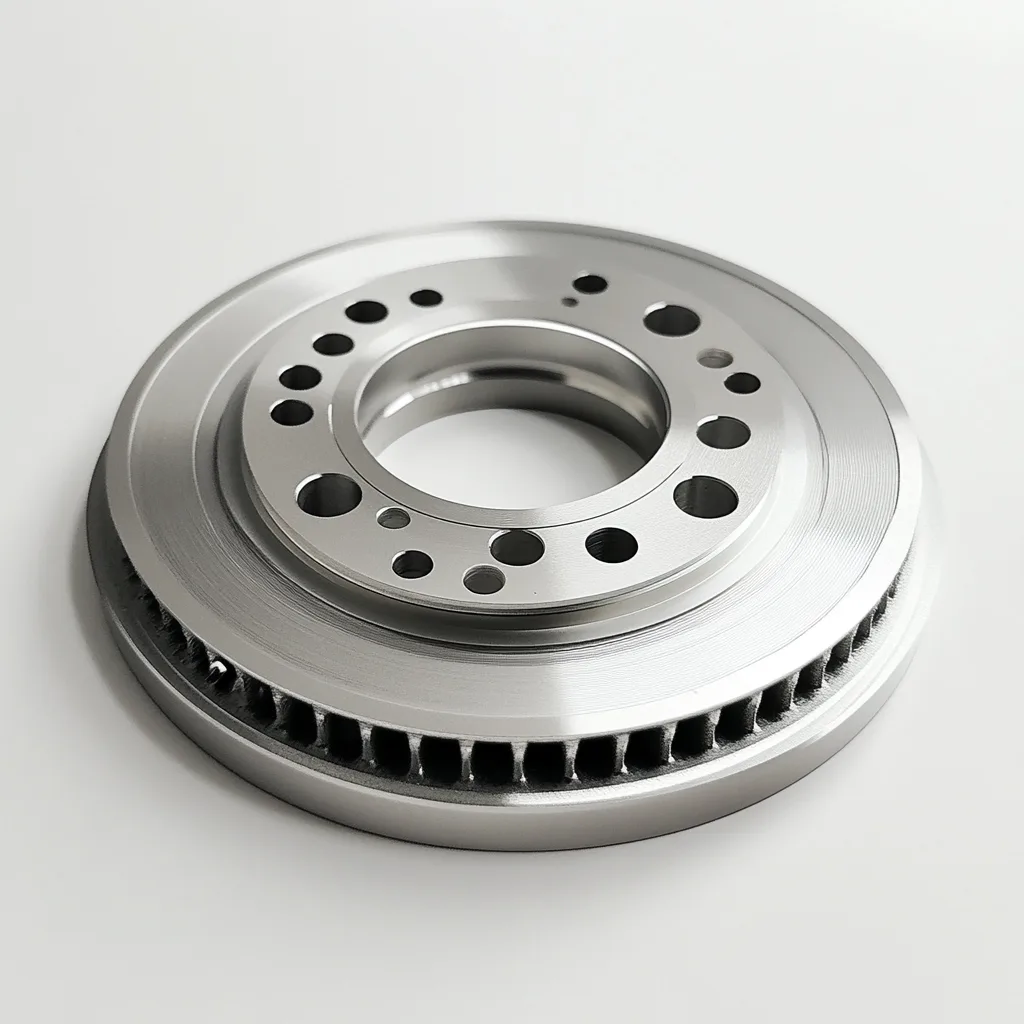
Many teams print complex near-net shapes and then CNC machine critical features. For most mechanical prototypes, however, direct machining from billet remains the most economical and reliable route.
Cost and Lead Time in Practice
For a typical aluminum bracket or housing, CNC machining is usually faster and cheaper than metal printing, and the surface is immediately suitable for finishing. Printing becomes competitive only when geometry complexity makes machining impractical.
How to Decide
Ask yourself: does my test depend on true material properties and accurate fits? If yes, machine it. If the geometry is impossible to machine, print it and post-machine critical features. Our custom prototype metal parts and rapid metal prototyping pages explain how we approach prototype projects.
Get a Quote for Your Parts
Send your drawing (PDF, STEP or DWG) with quantity, material and finish. An engineer from Zhufeng Precision will review it and reply within 24 hours.
FAQ
Is CNC machining more accurate than metal 3D printing?
Generally yes. Machined surfaces achieve tighter tolerances and better finishes; printed parts often need post-machining.
Can I anodize a CNC machined prototype?
Yes. Machined aluminum prototypes can be anodized exactly like production parts.
Which is cheaper for one aluminum prototype?
For most simple to moderately complex aluminum parts, CNC machining is cheaper.